
What an engagement actually looks like.
The same shape covers most of what we do, whether it starts as a security assessment, a network build or a fault nobody can place. You should be able to picture week one and the final handover before you sign anything.
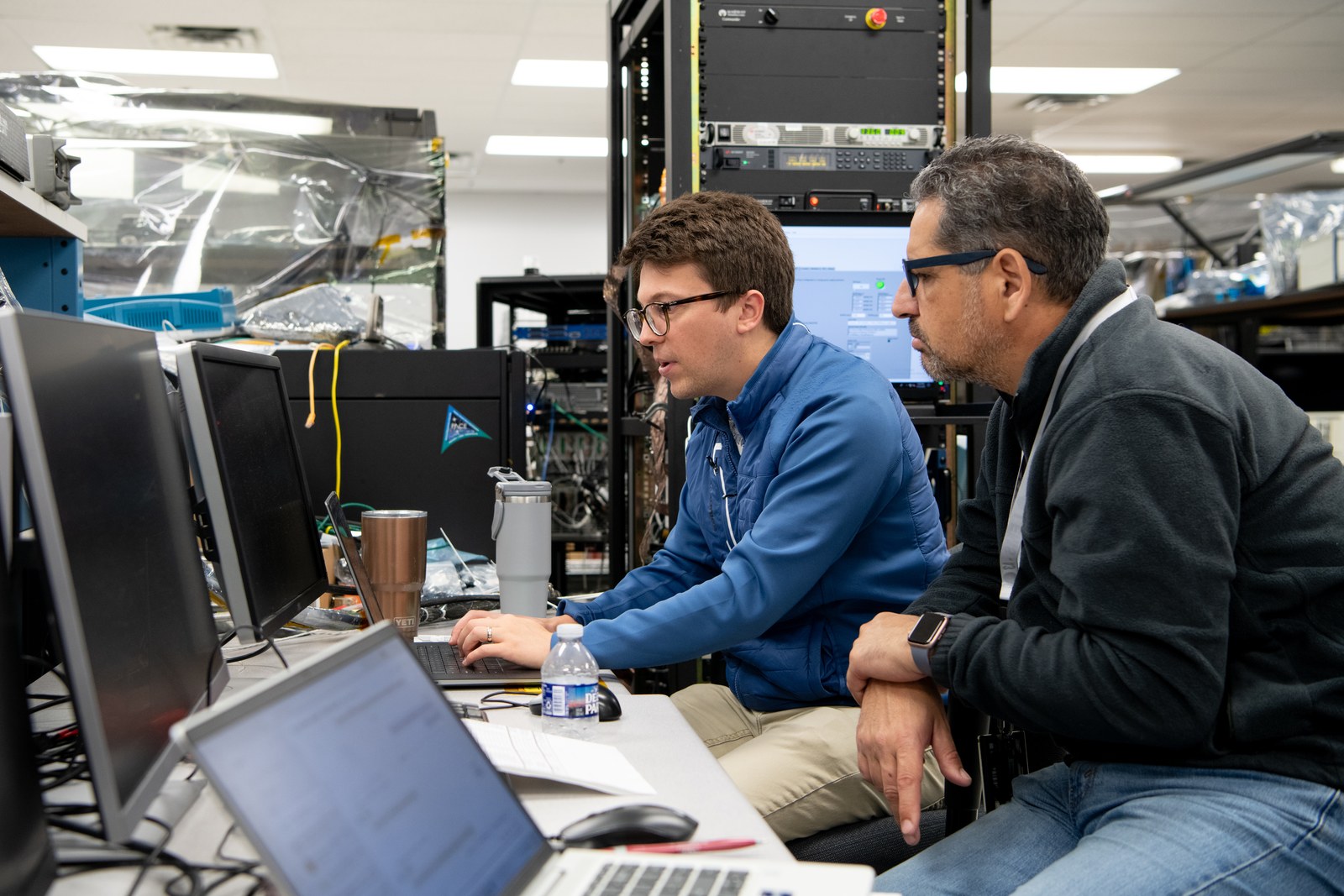
The plant sets the pace, not the calendar.
Most security advice is written for IT. It assumes you can patch on a Tuesday, reboot when you feel like it, and that the worst case is a lost afternoon.
Control networks do not work like that. A controller gets a maintenance window twice a year if you are lucky. An active scan pointed at the wrong device can fault it, and faulting it is not a ticket, it is a stopped line. The engineer who commissioned the cell has long since moved on, and the only surviving documentation is a laminated drawing taped inside the panel door.
So we work the way the plant works. Passive collection while the process is live; active work on a bench, or inside a window that was already booked for something else. We would rather spend a week on a mirror port than take a production risk to save ourselves a day.
Segmentation that nobody documented decays into a flat network within about two site visits, so every rule we put in gets a reason next to it. Whoever inherits the estate should be able to tell a decision from an accident.
How it runs
Book a scoping call
A first call about one site, free, with nothing to commit to. You describe the site, the problem, and the deadline if there is one. We ask the questions that tell us whether we can help, and if we cannot we say so and point you at someone who can. You get a written note of what we would do first.
Listen to what is actually on the wire
Before anyone draws a zone or quotes a rebuild, we find out what is really there. On a live process that means a mirror port and patience, not a scanner: which devices talk, to what, how often. The first deliverable is an inventory that is actually current.
Map it as it is
The estate against the levels you actually have, the zones and conduits the switches already agree with, and the ones that exist only on paper. We draw your plant, not the textbook picture of a plant.
Cost the work you would actually do
A prioritised plan with the money next to it: what to do now, what fits the next window, what can wait. A segmentation design that cannot be funded is not a design, it is a slide. You should be able to argue with the number, which means you have to be able to see it, so the plan shows its working.
Test and prove
Where testing is part of the job, it happens on terms agreed in writing, passive first, active only on a bench or inside a booked window. Skipping straight to enforcement is how a segmentation project turns into an outage, so we prove a change is safe before it is live.
Document and watch
You are handed a pack the next engineer can read: drawings that match what was built, a rule set with a reason beside every line, and the configuration backups taken at handover. If you want it watched afterwards, the same desk that built it keeps watching it.
The named next step: a Site Assessment
A scoping call is free and tells us both whether there is work to do. The first paid piece of that work is bounded and named, so you can say yes to something small and defined rather than an open-ended consultancy.
A Site Assessment covers one site. We come, we listen to the network, and we hand you an assessment you can act on: an as-found inventory of what is on the network, a zone-and-conduit model of what is really there, and a short, costed list of what to fix first. It is the map the rest of the work is planned from, and it is yours to keep whether or not you carry on with us.
What we will not do to a live process
- Point an active scan at a device that is running a process, unless it is on a bench or inside a window you booked.
- Enforce a segmentation change we have not proven is safe first.
- Leave a rule, a route or an account in place without writing down why it is there.
- Take a production risk to save ourselves a day.
Rules of engagement, in short
- Scope, windows and the out-of-bounds list are agreed in writing before the first packet.
- There is a stop-work condition and an on-call contact at the site for the whole test.
- Critical findings are reported the moment we confirm them, not at the end.
- You get the raw evidence, and our copies are destroyed on a date we agree.
Tell us what is bothering you.
An email is enough to start with. A scoping call is free and there is nothing to commit to, and where we are not the right people we will say so and point you at someone who is.
A first call about one site. No charge, and nothing to commit to.
Our named next step: we come to one site and hand you an assessment you can act on.